


Increasing Capacity with Economizer Usage in Chiller Units
In industrial refrigeration systems, the largest component of operating costs is the electrical energy consumed by compressors. When your facility's cooling demand increases or the efficiency of the existing system drops, the first solution that comes to mind is usually investing in a new and larger chiller unit. However, with engineering solutions based on thermodynamic principles, it is possible to achieve a significant capacity increase in your existing system. Leading among these solutions is the use of an economizer (subcooler). Particularly in chiller systems utilizing screw compressors, the economizer circuit is a critical component that increases cooling capacity and elevates the system's COP (Coefficient of Performance) without additional power consumption.
This article was automatically translated from the Turkish original.
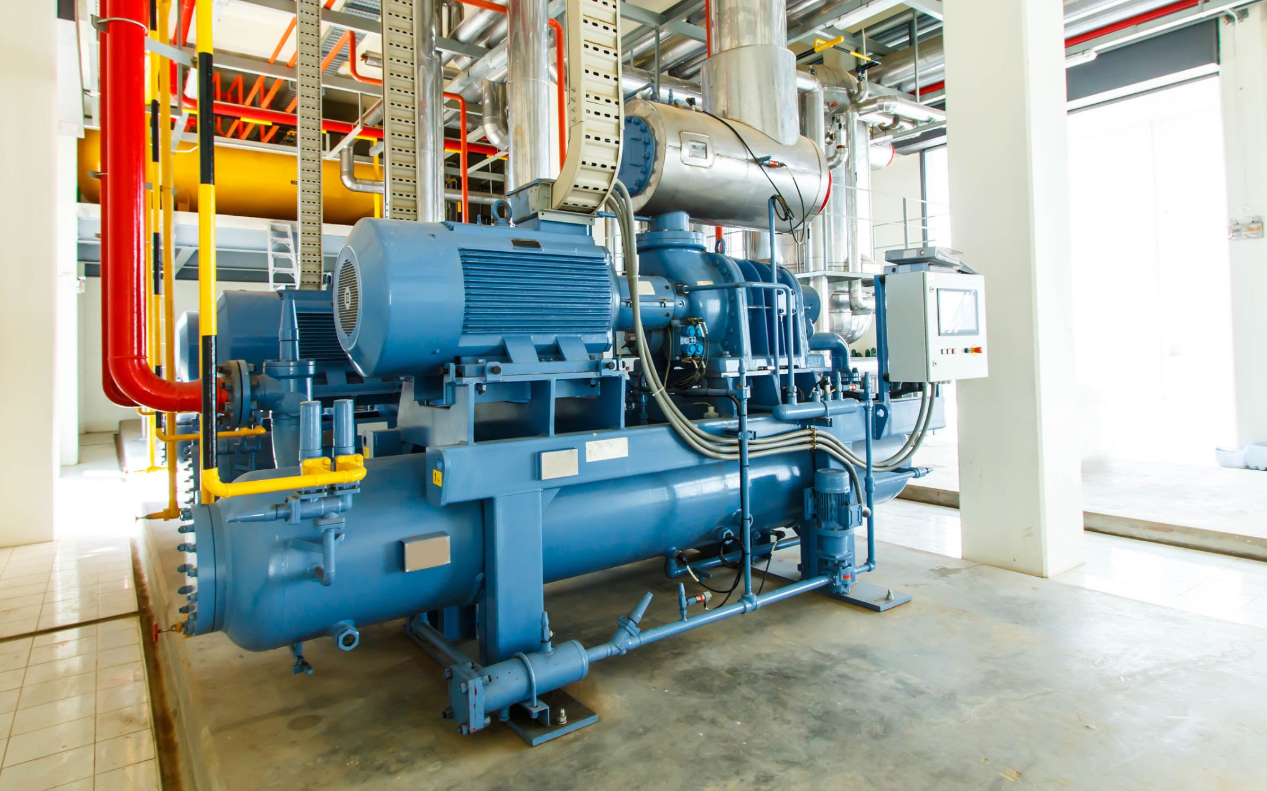
What is an Economizer (Subcooler) and How Does It Work?
In a standard refrigeration cycle, the liquid refrigerant leaving the condenser goes directly to the expansion valve (TXV or EEV). However, the lower the temperature of the fluid entering the expansion valve, the higher its heat absorption capacity in the evaporator.
An economizer is a plate heat exchanger system that subjects the refrigerant in the main liquid line leaving the condenser to subcooling before it enters the expansion valve.
Operating Principle:
A small portion (typically between 10-20%) of the high-pressure liquid exiting the condenser is bled off from the main line.
This small diverted portion is passed through an auxiliary expansion valve to reduce it to intermediate pressure. As the pressure drops, the temperature of the fluid decreases rapidly.
As this cooled fluid passes through the economizer (plate heat exchanger), it cools (subcools) the fluid advancing in the main liquid line toward the evaporator.
The intermediate-pressure gas evaporated in the economizer is injected directly back into the compressor through the economizer port (intermediate stage) on the screw compressor.
Mechanical and Thermodynamic Advantages of Using an Economizer
In our field capacity analyses at FSI Refrigeration, we observe that economizer integration provides the following key advantages to the system:
Increase in Cooling Capacity: Because a much colder fluid enters the main expansion valve, the enthalpy difference across the evaporator increases. This allows for 10% to 20% more cooling capacity to be achieved with the same mass flow discharged by the compressor.
Rise in COP (Energy Efficiency): Corresponding to this capacity increase, the increase in electrical power drawn by the compressor remains much more marginal (only the small extra work required to compress the intermediate-pressure gas). Consequently, the system's Coefficient of Performance (COP) directly increases.
Compressor Cooling: The gas returning to the compressor from the economizer port also helps cool the screw compressor. This extends the mechanical lifespan of the compressor, particularly under high compression ratios (high condensation temperatures in summer months or deep-freezing applications).
In Which Cases Is an Economizer Needed?
While an economizer is not essential for every refrigeration system, this engineering solution is virtually indispensable in the following scenarios:
High Compression Ratios: When low-temperature applications (-20°C and below) are performed using refrigerants such as R404A or R507.
Insufficient Capacity: When the existing chiller capacity is running at its limit due to facility expansion and additional capital investment wants to be avoided.
Hot Climate Conditions: In facilities where condenser temperatures rise excessively during summer months, causing a drop in cooling capacity.
Conclusion
Maximizing efficiency from your chiller system is possible not only through periodic maintenance, but also by operating the system with the correct thermodynamic design. If you want to increase the capacity of screw compressor chiller units at your facility and optimize energy bills, evaluating whether a suitable economizer retrofit can be implemented in your system presents a major opportunity.
At FSI Refrigeration, we carry out capacity calculations, energy efficiency analyses, and mechanical retrofits for your industrial refrigeration systems with our expert engineering team. You can contact us to enhance your system's efficiency.
Engineering support for your system
Contact our team for chiller selection, a maintenance plan or breakdown response.